FW de Klerk: The disputed legacy of SA’s last apartheid leader 30 years after defining speech
Thirty years ago today, FW de Klerk was president of a very different South Africa – one still governed by laws, and mindsets, intent on keeping white and black divided, unequal and ultimately apart.
On February 2, 1990, De Klerk, who was and still is a complicated figure of the country’s political past and present, made a significant speech which would set South Africa down a different path.
Was he a visionary? Was he pushed into making an announcement as the walls closed in on apartheid? Should he be hailed or is he only worthy of begrudging recognition?
Exactly thirty years ago today FW de Klerk, who had been president of South Africa for barely five months, made an announcement that broke political deadlock and led the country out of centuries of conflict and into an era of negotiation and democracy. His legacy though remains deeply contested, writes Pieter du Toit.

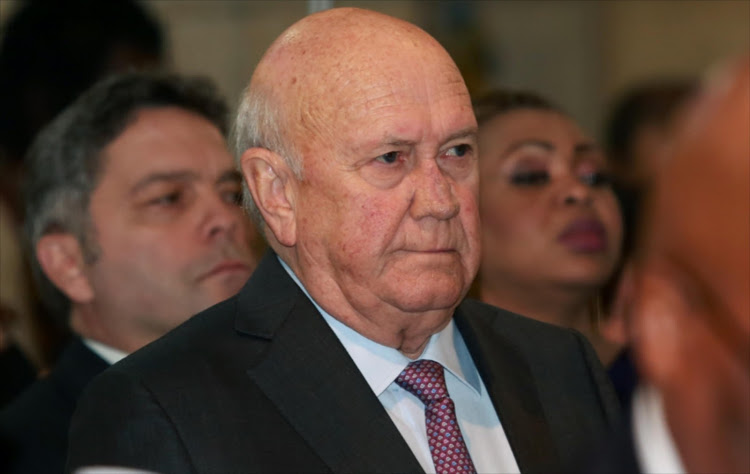
Former president FW de Klerk today. (Media24 Archives)
Former National Party (NP) cabinet minister Leon Wessels believes that although former president FW de Klerk’s dramatic address to Parliament on February 2, 1990, was the big breakthrough everyone was waiting for, it was preceded by two events without which De Klerk would not have been able to move as far and as quickly as he did.
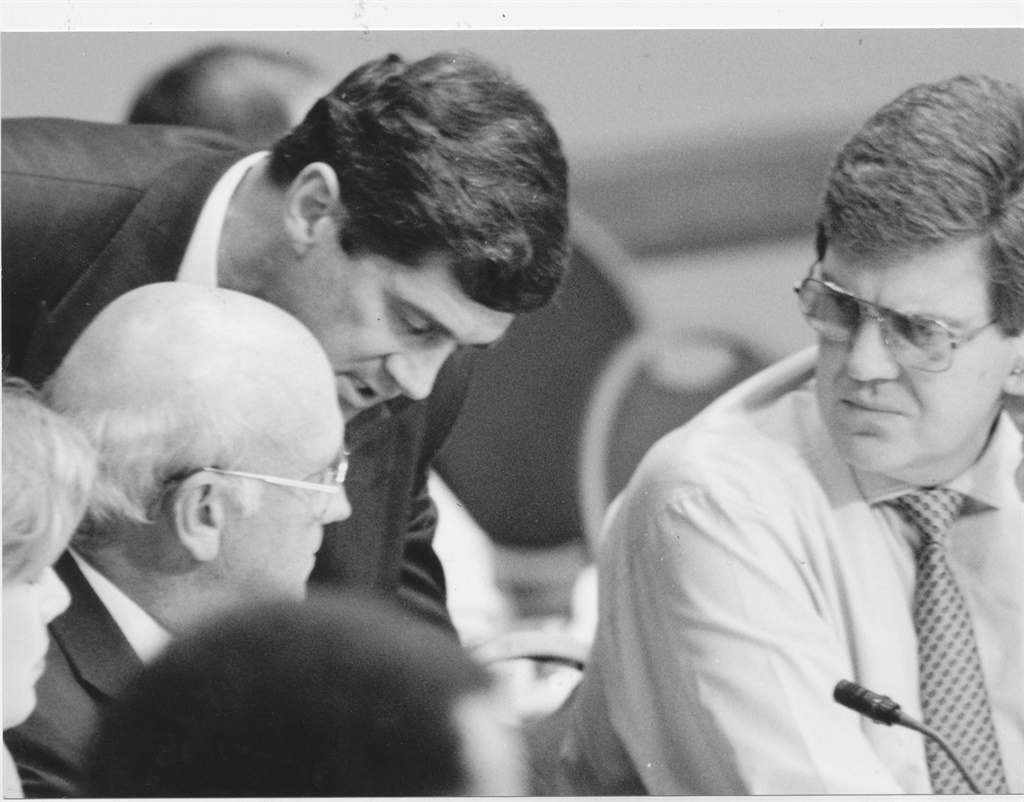
FW de Klerk listening to Roelf Meyer while Leon Wessels looks on, during the multiparty negotiations in 1992. (Media24 Archive)
Maharaj decries the narrow narrative – “we take the SA experience and limit it to Codesa, the constitution making and to the TRC” – and suggests that, for him, 1984 to 1990 was the most crucial period in making a negotiated path to democracy and the future possible.
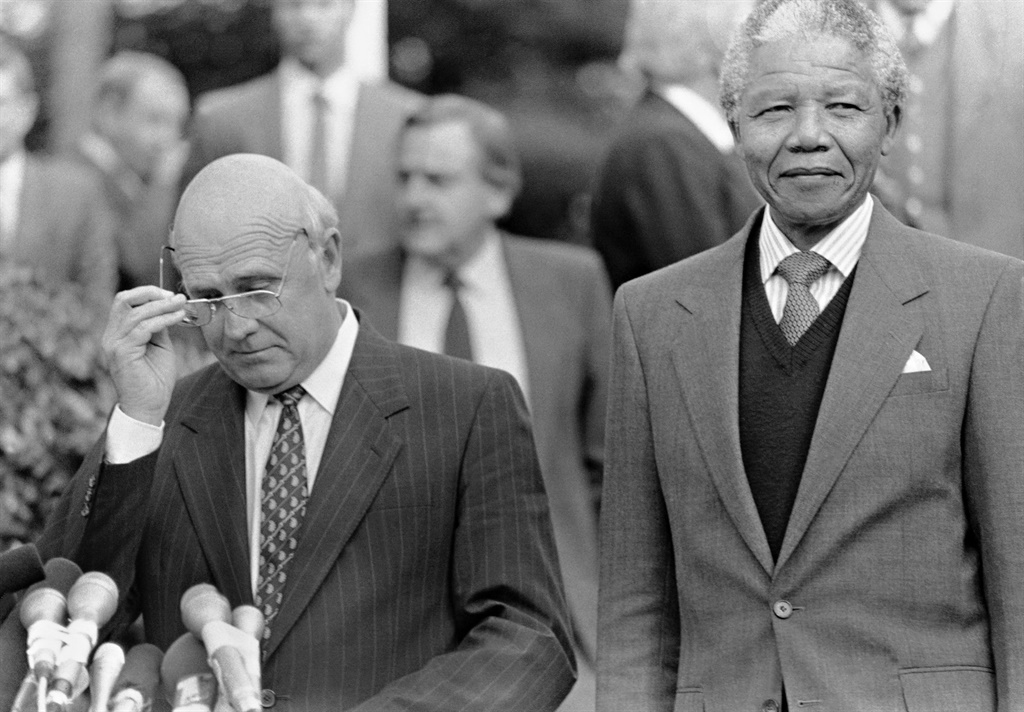
FW de Klerk and Nelson Mandela after a meeting between the National Party government and the ANC in 1990. (Gallo Images)
President Cyril Ramaphosa and former president FW de Klerk come from different sides of the political divide, but both faced complex problems which required (and for the former, still does) vision and determination. Maybe there are some lessons Ramaphosa can take from De Klerk and his history making parliamentary address of February 2, 1990, writes Pieter du Toit.

Then-ANC secretary general Cyril Ramaphosa, former president Nelson Mandela, and then-deputy president FW de Klerk speak to the press after their meeting on the issue of the Constitution on April 28, 1996. (Photo by Gallo Images/Business Day/Robert Botha)
Read the original article here