Building courageous communities
The National Adoption Coalition of South Africa is working hard to build courageous communities that put the needs and rights of our children first. In support of the United Nations Sustainable Development Goals adopted in August 2015, the Courage Child Protection community engagement programme is uniquely placed to drive goal 16.2 – to end …
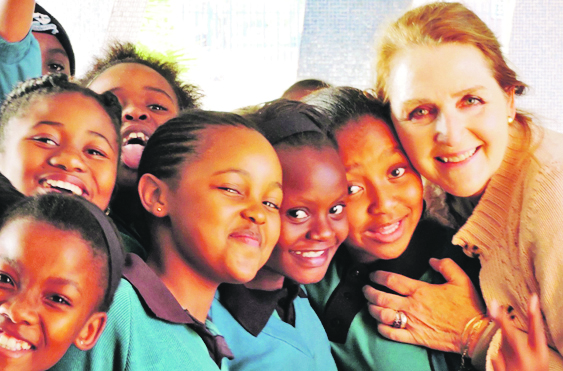
The National Adoption Coalition of South Africa is working hard to build courageous communities that put the needs and rights of our children first. In support of the United Nations Sustainable Development Goals adopted in August 2015, the Courage Child Protection community engagement programme is uniquely placed to drive goal 16.2 – to end abuse, exploitation, trafficking and all forms of violence against and torture of children by 2030.
Courage is a powerful picture-based toolkit that helps child protection organisations, communities, families and individuals to identify and solve the child protection challenges that they may encounter. Since its launch during Child Protection Week 2015, train-the trainer workshops have been conducted with child protection officers, organisations and communities in South Africa, Zambia, Lesotho and Zimbabwe. At the ‘Swedish Foundation for Children without Parental Care’ Global Conference in 2015, Courage was trained to representatives from 30 different countries and is now being used as an important child protection tool across the globe.
“Our primary goal over the past year has been to find partners who can use Courage to effect real behaviour change at a grass-roots level,” says Dee Blackie, global project leader for Courage on behalf of NACSA. “Beyond our adoption community, we have engaged with local and global child protection organisations like the United Nations, UNICEF, Higherlife Foundation, the Nelson Mandela Children’s Fund and our own Department of Social Development, all of whom positively endorse the programme. One of Courage’s key success points is its accessibility, being picture-based and freely available to download off the website means that anyone can access the programme and start to make a difference in their community straight away,” explains Dee.
Courage has also made inroads in the practical implementation of the South African Children’s Act, launched in 2010, especially amongst social work students. “We have run Courage workshops at the Universities of the North West, Free State and Witwatersrand, and many more have shown an interest in making Courage part of their curriculum,” says Katinka Pieterse, NACSA Chair. She adds that the programme helps students take their theoretical knowledge and apply it in a practical way, and because of the fun and engaging material, everyone leaves the workshops inspired to make a difference.
The insights gained over the past year have also been revealing in terms of child protection challenges in South Africa. “I start every workshop by asking the question, ‘why do we have children, what is their purpose?’ This question often shocks people, however the answers received illustrate why we have such child protection problems in Southern Africa. The four most common answers provided are 1) I don’t know, 2) To fulfil cultural obligations, 3) A great source of labour and 4) A great retirement plan. If these are the primary reasons that people state for having children, we should not be surprised at the high levels of neglect, harmful cultural practices especially within our patriarchal societies, child labour and child marriage,” says Dee.
There are further plans to expand on the Courage Toolkit in 2016, including:
- A practical parenting guide that prioritises the developmental needs and rights of children.
- A personal empowerment programme for teenagers called Courage Heroes, incorporating practical tools for identity development, rights awareness and sex education.
- A personal empowerment programme for young adults called Courageous Living, incorporating practical tools for mindfulness, entrepreneurship and financial awareness.
“The existing programme is very strong in the support of women experiencing a crisis pregnancy through option counselling, and families and communities in the identification and resolution of child protection challenges, but to make the programme sustainable we need to focus on empowering teenagers and young adults to take responsibility for their lives and to make wise choices, these new initiatives are focussed on achieving this objective,” adds Dee.
Courage training workshops and information sessions are being run throughout the months of May and June, in support of Child Protection Week 2016, for more information or to take part in a workshop please visit www.couragechildprotection.com or email dee@bobi.co.za.
NACSA’s plans in 2016, in the continued support of its vision ‘to unify and empower communities and society to create positive and permanent change in the lives of our children include:
- Our Choose to Care crisis pregnancy campaign crisispregnancy.org.za
- A new AddOption campaign focussing on adoption best practice and building towards World Adoption Day on 9 November – see adoption.org.za
- A National Adoption Workshop on 2-3 November 2016 see adoptioncoalitionsa.org
- Partnering with baby homes and crisis pregnancy support centres for our 2016, 16 Days of Activism Child Abandonment Awareness campaign in November/December.