Remarkable move towards Vaal’s WASH operation
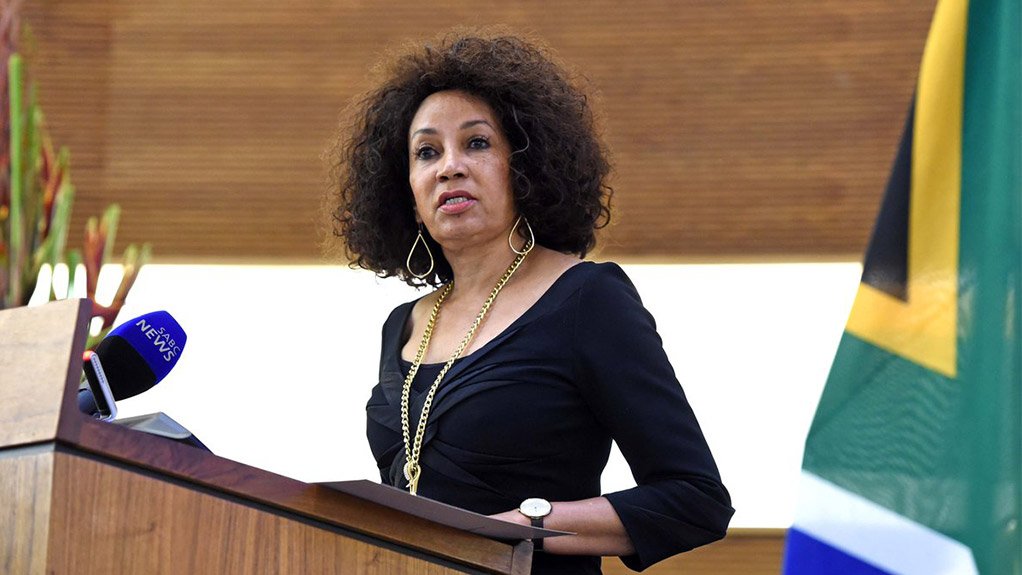
Minister Lindiwe Sisulu’s media briefing last week was good news on developments in Emfuleni’s wastewater infrastructure for local residents. However, there were additional information that should make us even more happy.

WASH is a water sector acronym for a concerted focus of modern water-related operations in all parts of the world. It has a bearing on Water, Sanitation and Hygiene – a programme led by the United Nations Children’s Fund (Unicef).
South Africa has been part of the international WASH programme for many years. At last week’s webinar, Dhesigen Naidoo CEO of the Water Research Commission, spoke about a remarkable move towards greater collaboration and a sense of purpose in technology development for the water sector.
It appears government’s centralised crisis planning strategies to combat COVID-19 have boosted WASH initiatives. Government is now focusing on municipalities, schools, as well as informal and more formalised settlements in the urban and deep rural parts of the country. A first priority is to improve wastewater infrastructure in local authorities and at almost 3 500 schools throughout the country. If all goes well, this could spell the end of inferior sanitary conditions at rural schools, informal settlements and poverty stricken areas in the country.
The water sector is now under pressure. Government wants to ensure there is water available for people to at least properly wash their hands. Schools are key to the plan. They are safe sites, where tanks with drinking water can be installed for public use. In areas without proper infrastructure this could be a boon.
Thanks to the COVID-19 pandemic there is a ‘new cohesion’ in government. Technology will play a significant role. New systems of wastewater treatment and toilet systems (low-flush, chemical and dry toilets) in under-developed areas, form part of the plans.
Where toilets are linked to pipelines, wastewater will flow to treatment works where another new innovation will be added – testing for traces of local areas where people may be suffering from Covid-19.
Between February and mid-March 2020 a Dutch research group, headed by Prof. Gerjan Medema of the Netherlands’ Koninklijke Waterraad’s Research Institute at Nieuwegen, reported on how they had traced the presence of the SARS-CoV-2 virus in the sewage of the city of Amersfoort, on 5 March – two weeks before the first case was reported by local health officials.
The news of the virus in sewage was a major breakthrough for water science. It was reported in an article on 29 March to the world’s scientific community working on Covid-19. The scientists focused on ribonucleic acid (RNA) present in all living cells. It acts as a messenger that carries instructions for the functioning of DNA molecules with double helix strands that form part of every living organism on the planet. The Covid virus in wastewater is dead and harmless, but its remnants can provide evidence of its presence in the faeces of humans.
As a rule, all wastewater (at functional plants) are tested for potentially contagious diseases. In times of an epidemic, like Covid-19, it makes sense for wastewater treatment works to test and report on inlets from which a virus can be inspected by environment health authorities.
In April 2020 there were enquiries on social media amongst local water activists and officials in Emfuleni. There were concerns that wastewater spills could carry the deadly virus into the community. We now know in wastewater there would typically not be a live Covid-19 virus.
According to Reuters News Agency (14 May 2020) the Dutch strategy for locating Covid-19 had passed through successful trial runs and tests in Europe and Australia.
Now South Africa’s water sector have taken the first steps for the introduction of this new tracking system in South Africa. We hope they pull it off successfully.
What does it mean for the Vaal River and its people? Gauteng Province is one of the country’s hot spots for Covid-19. The (hopefully treated) wastewater of some 13 million Gauteng residents daily flows into the Vaal River catchment. It translates into 70kg per capita per annum. Collectively we release at least 910 000 tonnes of faeces and urine (hopefully treated) into the river every year. It ultimately flows into the Atlantic on South Africa’s western seaboard.
If local wastewater plants could timely issue warnings on the spread of Covid-19 viruses, from upstream wastewater systems, it will help. WASH authorities and environmental health workers can then help take preventative steps to halt the pandemic.
Pundits claim as many as 240 000 South African lives will be lost if 50% of the country’s 57 million residents are infected with Covid-19. Imagine how that estimate can drop if the rate can be reduced, even if only by 25%.
- The author is an extraordinary professor at North-West University’s, Vanderbijlpark campus.